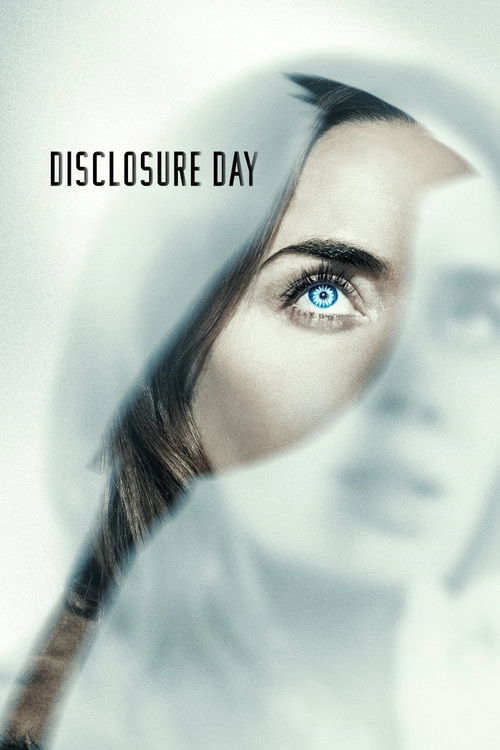
Disclosure Day Review
"It gave me that Spielberg feeling."
As someone who naturally drifts towards science fiction, Disclosure Day was always going to be right up my alley. What I wasn’t expecting was just how much it would remind me why Steven Spielberg remains one of the greatest filmmakers of all time.
There is a certain feeling that Spielberg captures that very few directors can replicate. It’s that emotional warmth you get from E.T., mixed with the excitement and adventure of something like Indiana Jones. He understands how to make audiences feel like children again, completely swept up in the wonder of what’s unfolding on screen. Disclosure Day gave me that feeling.
There were multiple moments throughout this film where I found myself genuinely sitting on the edge of my seat. I was excited. I was desperate to know what was going to happen next. I wanted answers, I wanted revelations, and I wanted to see where Spielberg was taking me. That’s something I absolutely loved about this movie.
Without giving too much away, Disclosure Day follows humanity as it is forced to confront a truth far greater than itself. Importantly, this isn’t an alien invasion film. It’s a first contact story. It’s a film about disclosure, about understanding, and about how humanity reacts when everything we thought we knew about our place in the universe changes overnight. And that’s what makes it feel so distinctly Spielberg.
While there are certainly moments of tension, mystery, and conflict, the film never loses sight of its humanity. It approaches its subject matter with warmth and compassion. Even the aliens themselves, despite not having a huge amount of screen time, are fascinating to watch. Their design leans into that classic image of extraterrestrials we’ve all grown up with through films, television, cartoons, and popular culture. Yet somehow, Spielberg makes them feel fresh.
What surprised me most was how sympathetic they were. At several points throughout the film, I actually found myself feeling sorry for them because of the way they’re treated by those in power. The fear and mistrust directed towards them often says far more about humanity than it does about the visitors themselves.
Emily Blunt is absolutely phenomenal. There is a reason she’s regarded as one of the best actresses working today. She brings so much emotion and sincerity to this role that she effortlessly grounds the film’s larger ideas. There are scenes where she speaks in different languages and, coming from someone who isn’t a native speaker, she sounded incredibly authentic. It genuinely impressed me.
Josh O’Connor is also excellent, and together the pair share one particular scene that I thought was genuinely beautiful. It’s difficult to discuss without venturing into spoiler territory, but everything about it worked. The visual effects, the performances, the atmosphere. There was a calming quality to it. It was simply lovely to watch unfold.
Speaking of performances, Colin Firth deserves a mention as well. He’s fantastic. You can immediately feel his presence whenever he appears on screen. He brings a quiet authority to his role and never overplays it. Besides, how can you possibly dislike Colin Firth?
One of the things I appreciated most about Disclosure Day was its pacing. Not once was I bored. I was completely encapsulated by the world Spielberg had created. The mystery continuously evolved in ways that kept me invested, and I was constantly excited to discover what new piece of information might emerge next. The film never dragged. It knew exactly when to slow down for quieter moments and when to embrace the excitement of its bigger sequences.
Interestingly, Spielberg has reportedly referred to Disclosure Day as completing an unofficial trilogy alongside Close Encounters of the Third Kind and E.T. Having now seen the film, I completely understand what he means. This movie shares that same emotional DNA. It’s less concerned with fear and destruction and far more interested in curiosity, wonder, and humanity’s response to the extraordinary.
Visually, I thought the film looked fantastic. I wouldn’t necessarily say that the cinematography is groundbreaking. It feels very much in line with what audiences have come to expect from modern science fiction cinema. It’s crisp, polished, and beautiful to look at.
However, what really stood out to me were the visuals themselves. Not because they were trying to constantly overwhelm the audience with spectacle, but because of their elegance. There is a simplicity to many of the film’s visual choices that I found incredibly effective. The effects never felt excessive or distracting. Instead, they served the story and enhanced the emotional experience.
And then there’s John Williams. Ninety-four years old. Ninety-four years old, and he still absolutely has it. What’s interesting about Disclosure Day is that it doesn’t really have an instantly recognisable musical motif in the same way that Indiana Jones, Jaws, or Jurassic Park do. You don’t necessarily walk out of the cinema humming a specific theme. But that doesn’t matter. Because the score itself is beautiful.
Particularly during the third act, Williams elevates everything happening on screen. You can feel his music. It wraps around the emotion of each scene and enhances it. There’s something comforting about his work, something magical that makes you feel safe even during moments of uncertainty. Only John Williams can do that.
The world-building throughout the film is also strong. I thought the relationship between the government organisations and the corporate interests involved in the story was established effectively. That said, I do think this was one area where the film could have benefited from a little more depth. Not because I needed every answer spoon-fed to me, because good science fiction should leave room for audiences to think, but because I became so invested in this world that I wanted to know more about its history, its politics, and the wider implications of what was unfolding.
And that leads into my biggest criticism of the film. The ending. Not because it’s confusing. Not because it doesn’t make sense. You understand exactly what’s happened. The issue is that the film ends just as it reaches its peak.
You’re left wanting to see the aftermath. What happens next? How does civilisation respond? What becomes of these characters we’ve spent the entire film growing attached to? How does humanity move forward after experiencing something so profound?
The film leaves you with those questions, and while some viewers will undoubtedly appreciate that ambiguity, I found myself craving just a little bit more. Not because I disliked what Spielberg had done. Quite the opposite. I wanted more because I loved spending time in this world. I wanted more scenes. More substance. More opportunities to explore the consequences of everything we’d just witnessed.
It’s frustrating because Spielberg doesn’t really revisit his stories anymore. I don’t imagine there’s going to be a sequel to Disclosure Day, and perhaps that’s why the ending lingered with me as much as it did. It wasn’t dissatisfaction. It was disappointment that I had to say goodbye.
I genuinely believe this is a film I’ll revisit. Even when you know where a story is heading, certain movies possess that natural rewatchability factor. Disclosure Day feels like one of those films. In fact, I wouldn’t be surprised if, given enough time, it develops something of a cult following.
Thematically, the film explores humanity in ways that are difficult to neatly summarise. There are numerous ideas woven throughout the narrative, and I suspect different audiences will connect with different aspects of them. What matters is that those themes resonated with me, even if I can’t perfectly articulate every single one of them.
Ultimately, if you’re already a Spielberg fan, I think you’re going to absolutely love this. His fingerprints are all over it. But I also think audiences who don’t naturally gravitate towards science fiction could really connect with what Disclosure Day has to offer. It’s thoughtful, heartfelt, occasionally funny, visually stunning, and full of genuine wonder.
Most importantly, it reminded me why I fell in love with science fiction in the first place. It gave me that Spielberg feeling. The feeling of sitting on the edge of your seat, desperate to discover what happens next. The feeling of being completely immersed in a world larger than your own. The feeling of leaving the cinema wishing the story had continued just a little longer because you weren’t quite ready for the journey to end.
And honestly, there aren’t many filmmakers who can still deliver that experience. Steven Spielberg can.